

|
Location |
Hazelwood North, Latrobe Valley, Victoria |
|
Capacity |
500 MW |
|
Storage duration |
Four hours, 2,000 MWh |
|
Connection |
Hazelwood Terminal Station |
|
Current status |
Planning application submitted, ongoing community engagement |
Energy reliability: a battery can deliver stored electricity when demand is high, helping reduce the risk of power shortages.
Lower power bills: batteries can help balance electricity supply and demand, supporting a more efficient energy system and helping put downward pressure on power prices.
Community benefits: a Community Benefit Fund will provide direct support for local projects and initiatives that deliver lasting value to the region.
Economic benefits: approximately 150 jobs expected during construction with opportunities for local suppliers and contractors and continued investment in the Latrobe Valley.
Energy continuity: the project will continue Gippsland’s tradition of powering the nation from its Hazelwood location.
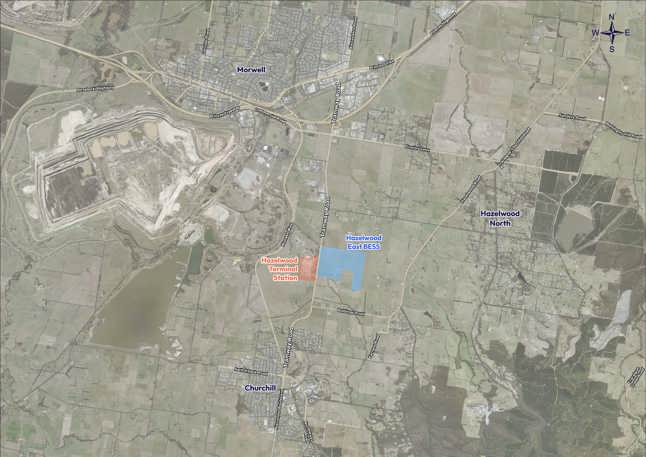
The Hazelwood East BESS is proposed on privately owned land adjacent to the Hazelwood Terminal Station in the Latrobe Valley.
The location has been carefully selected due to its proximity to existing transmission infrastructure, allowing the project to connect efficiently to the electricity network while minimising the need for additional network infrastructure and preserving other land in the area for agricultural uses.
Project design has also considered the surrounding landscape, and the project site is set back from the road to reduce its visual presence.
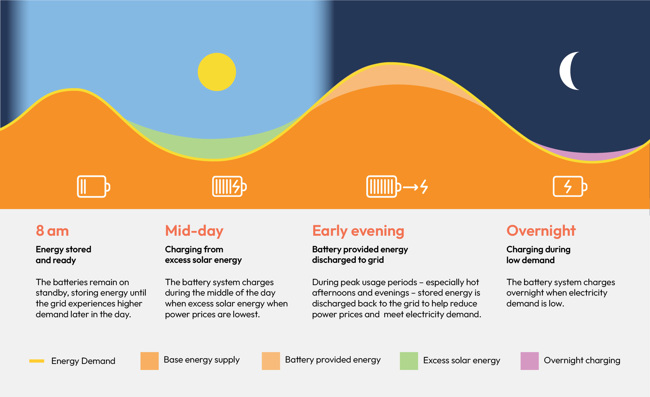
Australia’s electricity system is changing as more renewable energy comes online.
Battery Energy Storage Systems play an important role by storing electricity when there is a surplus and supplying it back to the grid when demand increases. This helps keep the electricity system reliable, supports greater use of renewable energy and helps to reduce electricity prices.
Large-scale batteries also provide important services that help maintain a stable and secure electricity network, particularly during periods of peak demand.
The project is progressing through planning, environmental assessment and stakeholder engagement before construction can commence.
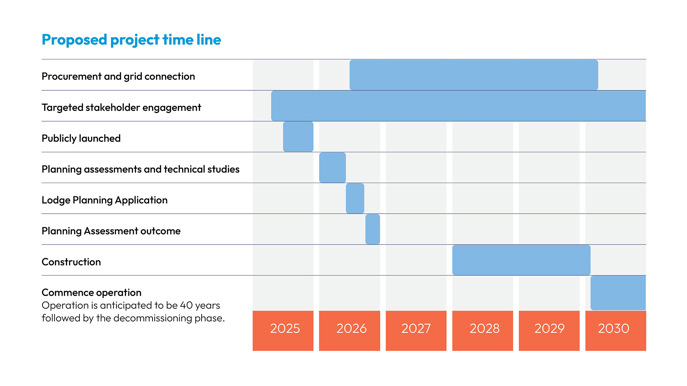
*Timeline is subject to change, pending approvals processes.
Meaningful engagement is central to how Voyager Renewables develops projects. Our goal is to ensure a transparent and mutually beneficial relationship with local communities over the life of the project.
Since early development, we have been engaging with local residents, neighbouring landholders, community groups, government agencies and other stakeholders to provide information, answer questions and understand what matters most to the local community.
We recognise that local communities have valuable knowledge and perspectives. Feedback received throughout the project development helps us better understand community priorities, identify opportunities to refine the project where possible and continually improve how we engage with stakeholders.
Our engagement approach focuses on:
· Engaging early and throughout the project lifecycle
· Providing timely and accessible information
· Listening and responding to community feedback
· Building long-term relationships based on transparency and respect
· Keeping the community and stakeholders informed as the project progresses
There will be ongoing opportunities for community members to learn more about the project, ask questions and provide feedback as the project progresses.
The Hazelwood East BESS is located on Gunaikurnai Country.
Voyager Renewables recognises the Gunaikurnai People as the Traditional Owners of the land and is committed to building a respectful and enduring relationship with the Gunaikurnai Land and Waters Aboriginal Corporation (GLaWAC).
We are engaging with GLaWAC throughout project development to understand cultural values, support appropriate cultural heritage processes and identify opportunities to deliver the project in partnership.
We believe energy projects should deliver lasting benefits for the communities that host them.
Alongside the project’s economic benefits, Voyager is developing a Community Benefit Sharing Program that reflects local priorities and supports initiatives that strengthen the Gippsland community.
Independent social research has been undertaken to better understand local needs and aspirations, and we continue to engage with community organisations, local government and stakeholders as the program is developed.
Further information about the Community Benefit Fund will be shared as the project progresses. We’re open to all suggestions – if you have an idea you would like us to consider, please contact our local Community Manager via Hazelwoodeast@voyager.energy
The Hazelwood East BESS Planning Permit Application has been submitted to Victoria’s Department of Transport and Planning (DTP) under the Development Facilitation Program, and is on public exhibition from Tuesday, 20 October 2026 to Tuesday, 17 November 2026.
During the public exhibition period, community members and other interested stakeholders can view the Planning Permit Application and supporting technical documents and make a submission directly to DTP.
View the Hazelwood East BESS Planning Permit Application (Application number: PA2604502) and supporting documents on the DTP website.
Public exhibition is part of DTP’s formal planning assessment process. Following the exhibition period, DTP will consider submissions received as part of its assessment of the Planning Permit Application.
We’ll update this website regularly with project news, newsletters, engagement activities and key milestones.
Recent updates include:
The Hazelwood East BESS is expected to create employment opportunities during construction and ongoing operational roles once the project is complete.
We are committed to working with local businesses and suppliers wherever practical.
Businesses interested in supplying goods or services to the project are encouraged to register their interest via email to Hazelwoodeast@voyager.energy.
· BESS frequently asked questions
· Display posters – community information session
We welcome questions and feedback from all stakeholders. If you would like more information about the Hazelwood East BESS Project, please contact our local Community Manager, Cara Cranitch as below.
Email: Hazelwoodeast@voyager.energy
Phone: 0455 216 415